
Article -
Not Every Season looks like Growth
Articles
Not Every Season looks like Growth
One of the things I enjoy most about growing fruit trees in pots is that they constantly remind me that nature has very little interest in following my plans.
In my back garden I have potted saplings. I have a pair of damsons, a pair of cherries and a pair of plums. Each receives the same care, the same watering, the same feeding and the same weather, yet each one seems determined to grow in its own way and in its own time.
When the damson trees arrived, they came in enormous jiffy bags packed with straw. It wasn't quite the picturesque arrival I had imagined, but the straw did a good job of protecting them during their journey and for adding a layer above the stones at the bottom of the pots for assisting with drainage.
As I unpacked them and moved them into their new homes, large cement-mixing trugs with handles rather than pots, which made them much easier to move around the garden, I discovered that one of the trees had suffered substantial root damage. When it had been dug up and potted for transport a garden spade had cut a flat line through several of the roots. From the top, it looked perfectly healthy, and if you hadn't seen beneath the surface you would never have known there had been a problem.
I suspected it might struggle.
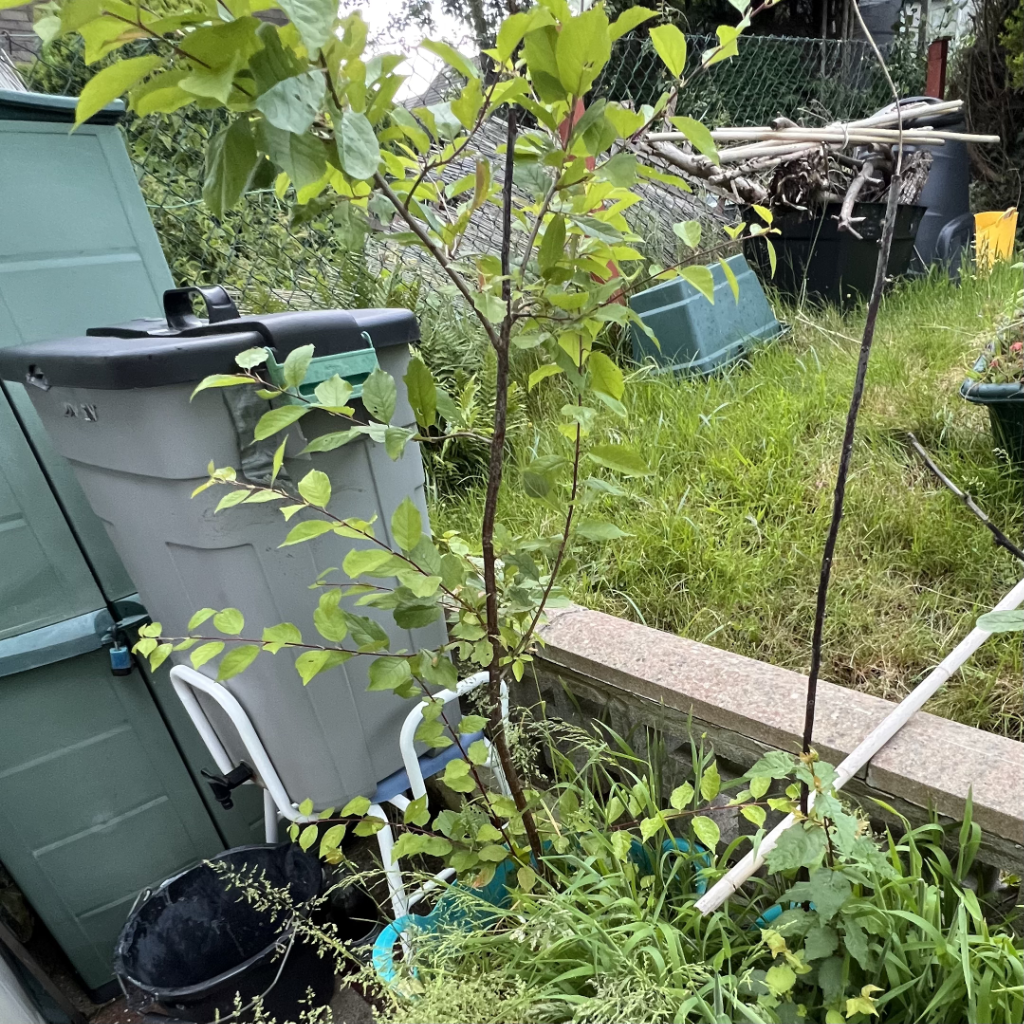
Over the following months, that's exactly what happened. While its neighbouring damson settled in and began to flourish, this one seemed to decline. Through autumn and into spring, it looked increasingly unhappy. There were moments when I wondered whether it was worth holding on to. Then I noticed something unexpected - tiny shoots had started emerging from the very base of the tree. What had looked like decline wasn't decline at all. The tree had been investing it's energy into it's roots before shoots and fruits. It had been investing into repairing what had been damaged beneath the surface, strengthening its foundations.
The new growth is still small. This sapling will take longer to reach the size and maturity of its sister tree, but it is growing.
The straw packaging brought another surprise. A few weeks after planting the trees, tall grasses began appearing in several of the pots. At first, I wasn't entirely sure whether to follow my instinct was to pull them out or leave them be and monitor them. I left them be. Many plants benefit from companion planting, and I was curious to see what would happen.
As the weeks passed, it became clear that this wasn't standard grass. It was wheat, almost certainly carried in with the unthreshed straw used to protect the trees during transport. By accident, I found myself with a miniature wheat field growing amongst my fruit trees. By late summer, the wheat had ripened into beautiful golden heads. I used some of the sheaves for Lughnasadh Harvest Festival decorations and allowed the rest to die back naturally, returning nutrients to the soil and dropping seed, hopefully to return for another year, as the stow-away wheat had turned out to be both useful and beautiful.
Meanwhile, one of my plum trees has provided a different lesson. Despite receiving exactly the same treatment as its companion, it has stubbornly refused to produce a single leaf this year. Whether it is dormant, delayed or simply no longer with us remains to be seen. The frustrating part is that there is no obvious explanation. The conditions and care are the same and yet the outcomes are completely different.
It makes me think of the countless business gurus who promise that if you simply follow their formula, you'll achieve the same results they did. These two plum trees receive exactly the same care. They sit side by side. They are watered together, fed together and exposed to the same weather. Yet one is thriving while the other remains stubbornly dormant. The difference isn't in what happened after they arrived. The difference may well lie in what happened before.
What experiences did they have before they reached my garden? What happened beneath the surface that I cannot see?
The same is true for people.
Two founders can follow the same advice, invest in the same programme and implement the same strategy, yet achieve very different outcomes. Not because one is working harder or wants success more, but because each brings a different history, different resources, different challenges and different foundations to the table. Identical treatment does not guarantee identical outcomes.
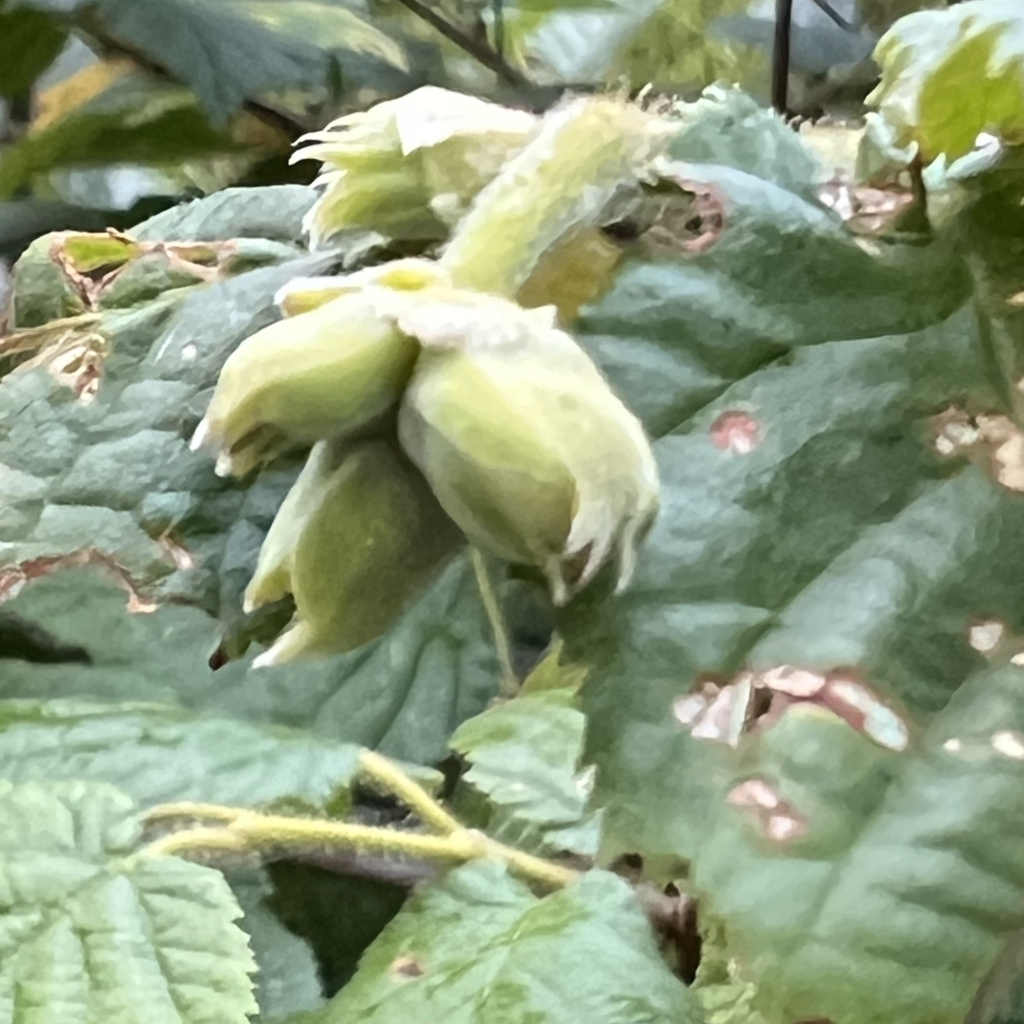
There is also a potted hazel tree, given to me shortly before lockdown. For several years it has quietly occupied its corner of the garden without needing to be fussed. One summer, after an unexpectedly hot and dry long weekend away, I returned to find it looking scorched and sorry for itself. I wasn't sure it would recover. This year, however, it is producing its first hazelnuts.
They've also become home to a small army of caterpillars, who have enthusiastically chomped through many of the higher-up leaves. Ordinarily I'd' be concerned, but they look interesting and will hopefully evolve equally beautiful butterflies or moths. Besides, it's better than them chomping through growing vegetables - the sapling can sustain the onslaught with much less worry, and because the tree is healthy enough to cope, it's success is supporting other life in the garden.
Standing amongst the pots recently, I realised how often we judge growth by what we can immediately see: the leaves, flowers an fruits or nuts, because those are visible evidence that progress is happening.
Often the most important growth is often hidden, like those roots strengthening beneath the soil where energy was being directed towards recovery and the foundations being laid for what comes next.
For many women building businesses, leading teams or navigating significant changes in life, there are seasons that can feel deeply uncomfortable. Seasons where progress appears slower than expected. Seasons where it seems everyone else is producing visible results while you're still doing the groundwork.
Standing amongst the pots recently, I realised how often we judge growth by what we can immediately see: leaves, flowers and fruit, the visible signs that progress is happening. Yet the damson spent months repairing damaged roots before producing fresh shoots. The hazel spent years quietly establishing itself before producing nuts. Even the wheat arrived as an unexpected by-product of something I initially viewed as little more than packaging.
For many women building businesses, leading teams or navigating major life changes, growth can look frustratingly invisible for long periods of time. While somebody else appears to be launching, scaling, publishing or celebrating, you may be rebuilding confidence after a setback, strengthening your foundations, refining your offer, developing new skills or creating systems that nobody else can see. From the outside, that can look like standing still. It isn't. It's root work.
Sometimes opportunities arrive disguised as inconveniences to overcome, and you can think about it as annoying, inconvenient, useless crap or manure, much like wheat seeds hidden in a bundle of straw and the stow-away seeds within it.
The damaged damson may never grow in quite the same way as its sister tree. The plum may yet surprise me. The hazel has taken years to produce its first harvest. Each one is following its own timeline. Perhaps that's why I enjoy growing them so much. They are a constant reminder that growth isn't always obvious, linear or predictable. Sometimes the season calls for blossom. Sometimes it calls for fruit, and sometimes it calls for strengthening roots that nobody else can see.
The challenge is learning not to confuse one season with another.